
 +8618266221406



0102030405
Auto Poultry Drinking Line Introduction with Right Angle
2025-07-04
Drinking System
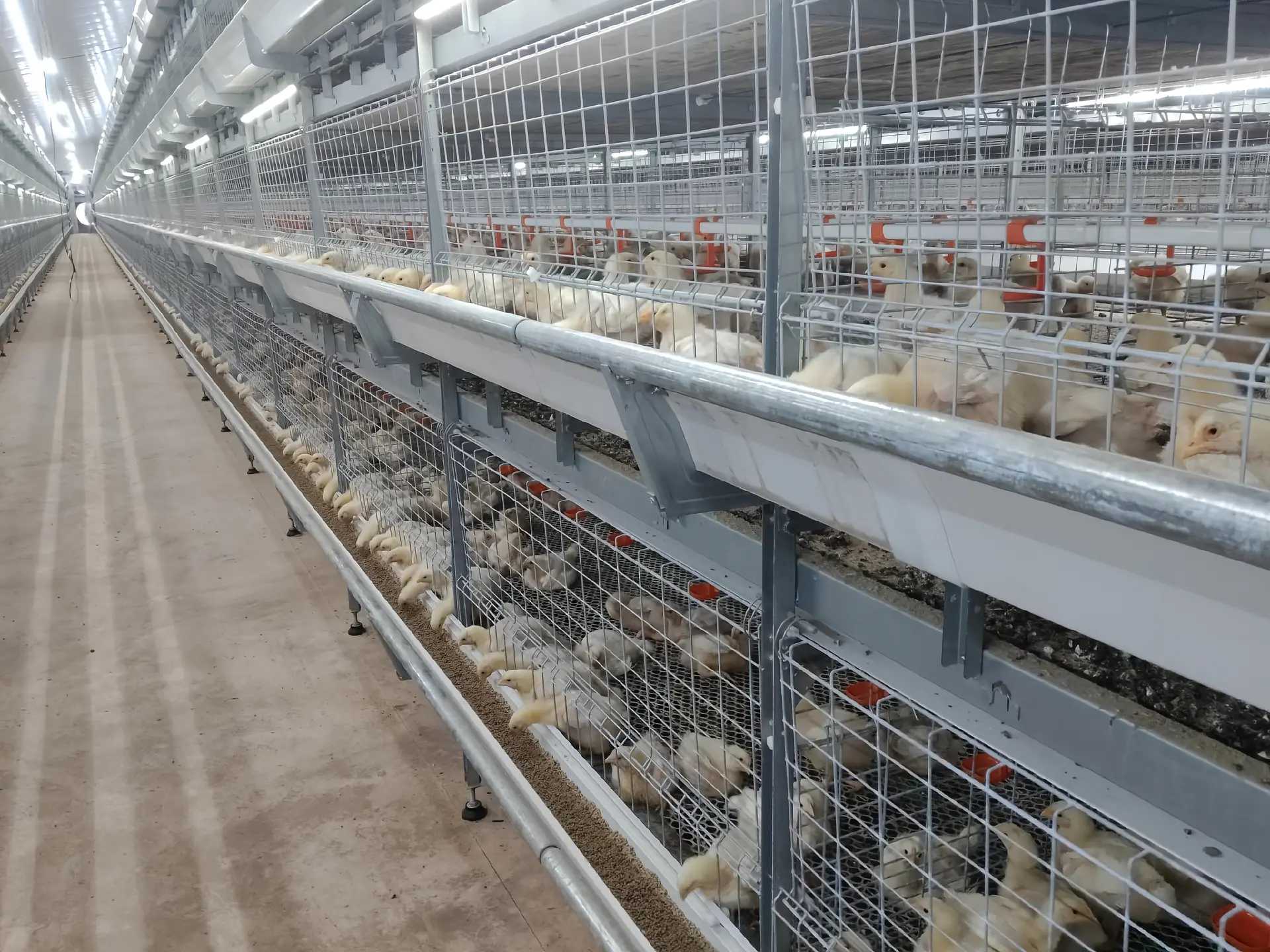
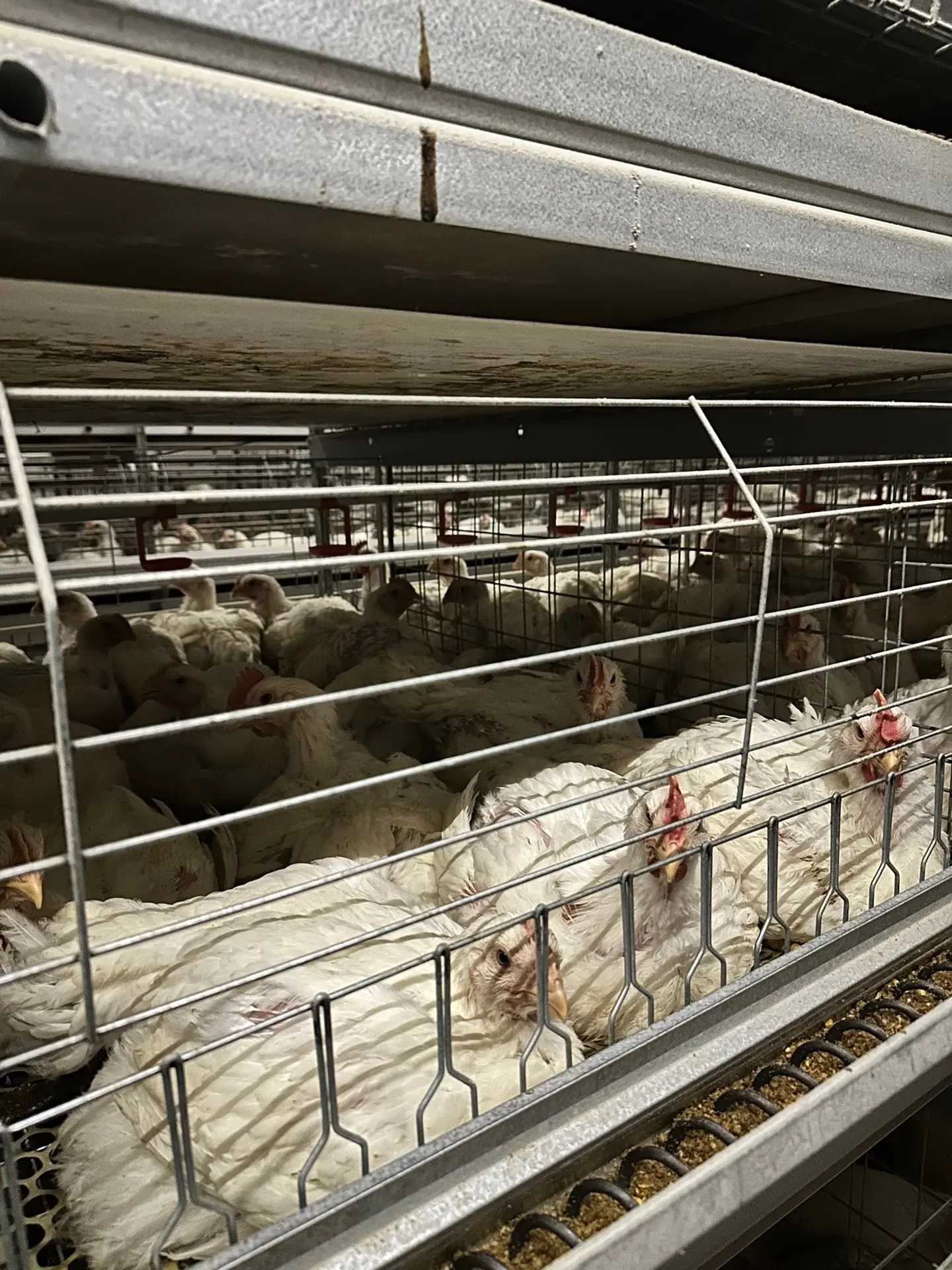
Chickens should have free access to clean, fresh, good quality drinking water at all times. However, controlling water intake when birds are drinking less, such as at night when birds are quiet, can help reduce unnecessary water leaks and associated litter problems. Any water control measures must be carefully managed, the total water intake must be adequate, and must be balanced between growth, welfare and the potential risk of podoconiosis. Improper water supply, either in terms of quantity or location, can affect weight gain. To ensure that birds are drinking enough, the water to feed ratio should be monitored daily. Variations in water intake are an early sign of health and performance problems.
Water consumption should be monitored daily using a water meter. The flow and pressure of the water meter must be matched. It is good practice to use a water meter that measures the water flow at low pressure to ensure that water intake can be accurately measured even for chicks and young broilers. Each house should be equipped with at least one water meter, but it is best to have multiple meters in different areas of the house.
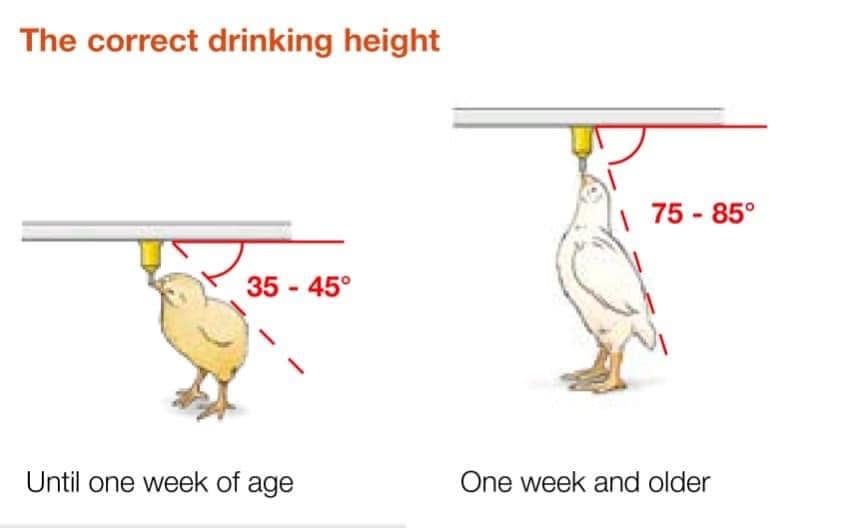
The farm must have a reserve of drinking water to prevent water supply failure. Ideally, the reserve should be sufficient to supply the birds with a maximum 24-hour supply. The height of all drinking systems must be checked daily and adjusted if necessary. Drinking systems should be kept clean and in good working order, free of litter and feces. During flushing and disinfection of the house, any calcium deposits in the drinking system should be thoroughly removed with an appropriate cleaning product.
Water quality
In areas with poor water quality, it is usually necessary to treat the water with chlorine or ultraviolet light before the birds drink. For more information on water treatment and water quality, refer to the Health and Biosecurity section.
Nipple drinking system
The minimum nipple drinker requirements for birds after brooding are shown in Table 3.6. Additional drinkers should be added for the first 3 days of brooding (10 drinkers per 1,000 birds).
The actual number of birds per nipple depends on water flow, age at market, climate and house design. In order to achieve optimal production performance, the drinking water system needs daily management (height, hygiene and working condition) during the breeding period.